How to take care of your lawn in September
 Share
Share
One of the more important months for lawn care is September. This is the best time to fertilize, to seed and to control weeds. Your efforts will not only help your lawn recuperate from summer stresses, but they will prepare it for the winter months and spring recovery.
Fertilizer for fall
The best time to fertilize the lawn is in September. Lawn grasses grow roots and tillers in the fall, so that is the type of growth you want to promote, rather than top growth. A proper fall fertilizer has a high potash level (last number on the bag) like, IRON+ Winter Guard Fertilizer 22-0-12. This high potash is required to build up your lawn’s defenses for the oncoming winter.
Understand your seed mix
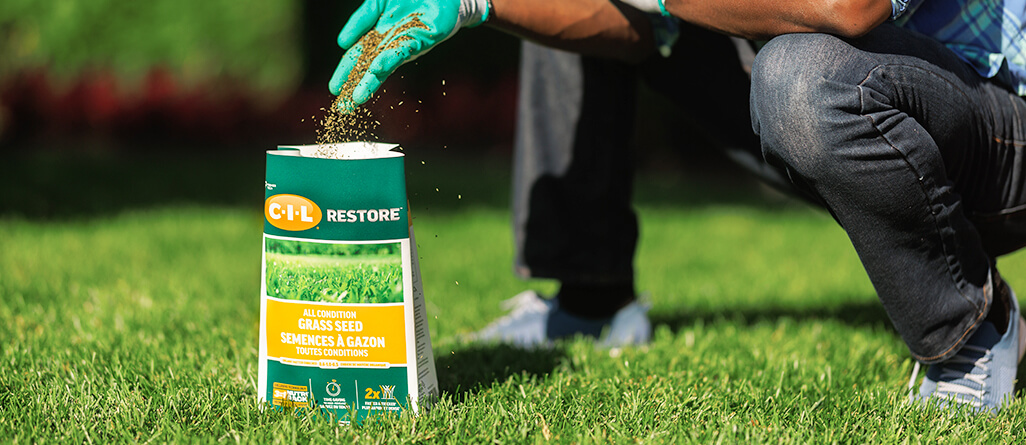
Grass seed mixes are a combination of Kentucky bluegrass, tall and fine fescues, and ryegrass. The ryegrass will germinate first (within 7 days) and is used in all mixes to provide quick cover. It is also a grass suited for drought and traffic stresses.
Tall fescue is second to germinate (within 10-14 days) and is the most drought-tolerant grass. The fine fescues are germinating shortly after (10-20 days) and are a good general seed for both shady and sunny areas. The Kentucky bluegrass is the slow one, taking over 21 days to germinate. It is an important grass, as once established, it is the one that will send new grass shoots to fill in any bare spots.
Most of the other grasses do not send new shoots into bare spots. Kentucky bluegrass is the least drought-tolerant and the first to go dormant in dry periods, but still a good seed to have in a mix.
What grass seed mix is the best?
Today, grass seeds are often mixed according to homeowners’ needs. In the store, you may find a mix for thick, luxurious lawns, one for low maintenance, one designed for drought and wear tolerance, and even mixes that contain grass types that repel insects and prevent weed germination.
The decision is based on what type of lawn you want.
Learn how to make the right choice for your grass seeds in our other article.
Repairing bare patches
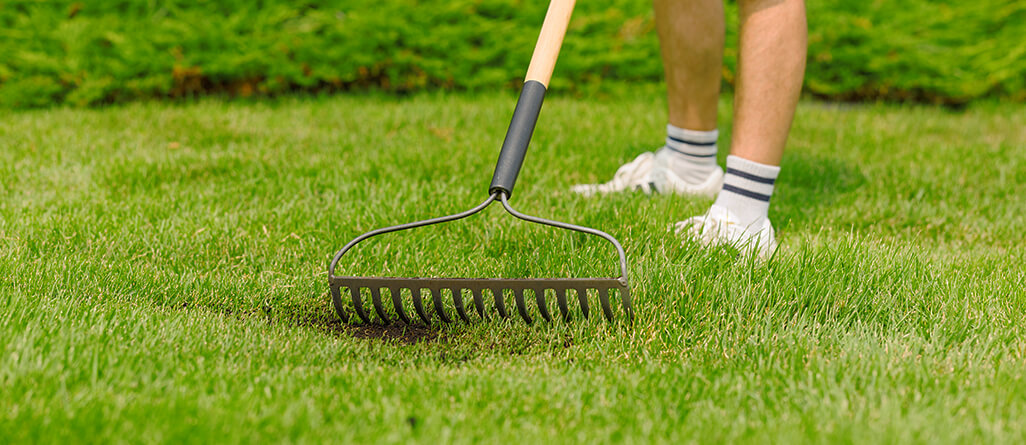
Cover all bare areas with a thin layer of enriched lawn soil, scatter your grass seed and rake it into the lawn soil. You should pack it down with the back of a shovel to ensure good seed-to-soil contact.
All-in-one seed/fertilizer and compost for reviving a normal lawn
New products are now available that combine fertilizer and seeds, such as C-I-L Restore Feed & Seed Lawn Fertilizer & Grass Seed. It's applied with a spreader to revitalize a tired lawn in no time!
Weeds are vulnerable at this time of year
Fall is the best time for broadleaf weed control. Applying a spot spray selective weed killer, like Wilson Weed OUT, allows the herbicide to not only be absorbed by the weed’s leaves, but also to be readily translocated to the roots. That’s because the weeds are busy currently transferring carbohydrates from the leaves down to the roots in preparation for winter, taking the weed killer down with them. You get a total kill.
Crabgrass is a weed that has no post-emergence selective herbicide registered in Canada. If you see this weed, it is best to manually pull it out.