Why mulch in autumn?
 Share
Share

Like more and more people, you’ve opted for plants that are hardy in your region and that don't require winter protection. You've chosen to put an end to (or limit as much as possible) the fall chores that require installing snow fences and protective covers. This doesn't mean, however, that all your plants will survive the winter without difficulty.
As temperatures get cooler and nights get colder, your garden is preparing for winter. A simple application of mulch will protect the roots and allow your perennials and shrubs to thrive come spring.
What are the benefits of mulch?
Useful during the summer to fight weeds, delay water evaporation and keep the soil cooler, mulch also plays a protective role during extreme temperatures, regardless of the season.
In summer, it protects the soil and roots from heat waves, which stress your plants. In winter, it plays the same role by protecting them from the frost and intense cold.
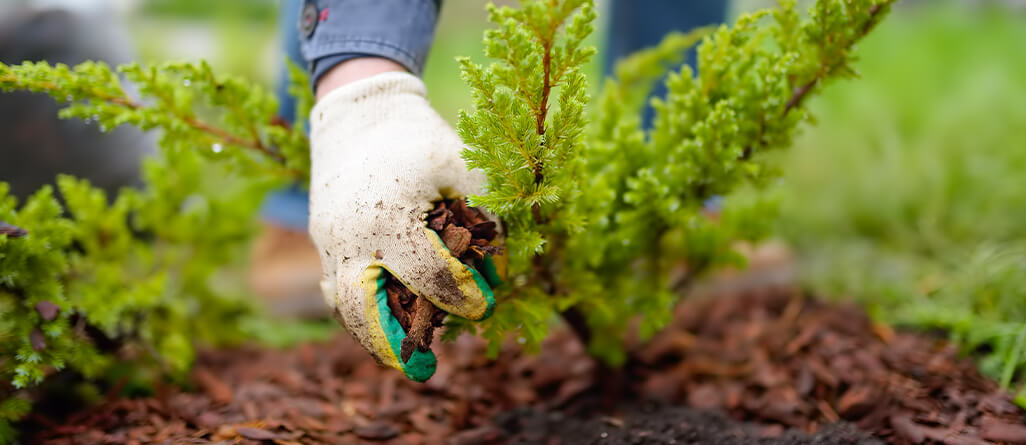
Why use mulch?
In the fall and spring, when temperatures fluctuate, your plants must deal with constant variations that put unnecessary stress on them. Applying a sufficient layer of mulch helps keep the soil temperature more consistent while retaining the moisture they need at this time of year.
Which plants should you protect from the cold?
Even in their hardiness zone, some plants may find it harder to get through the winter. So, even if the label says that a plant is hardy in your region, under certain conditions, it may not survive.
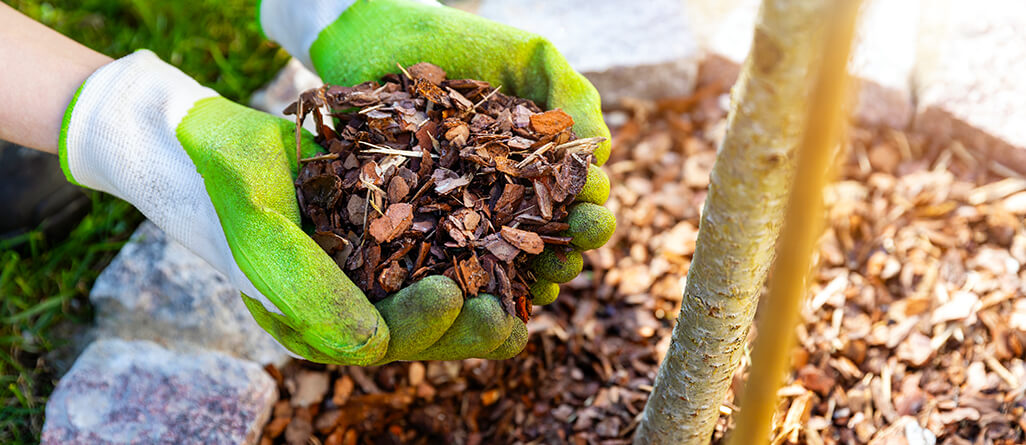
Plants that should always be mulched in the fall:
- Those grown close to the edge of their hardiness zone.
- Those recently planted (they should be protected during the first winter... some will even require full protection in addition to mulch).
- Those planted in a location where snow doesn't accumulate as much as elsewhere on the property.
- Those grown in a windswept area (preventing snow from accumulating).
- Those planted near the house or a heat source and where the snow melts prematurely.
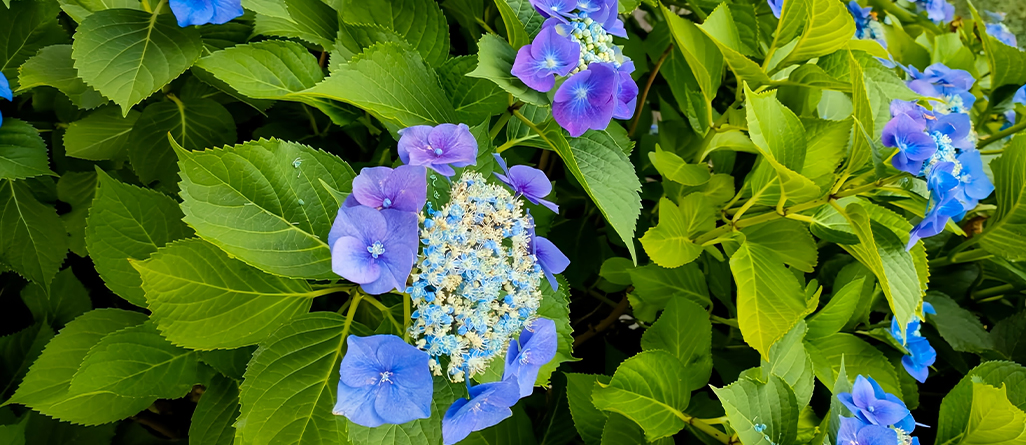
Climate change has also made our winters difficult to predict. Many regions no longer benefit from the insulation provided throughout the cold season by regular and abundant snow. When frost sets in and snow is delayed, or when periods of freezing and thawing occur in succession and last longer, some plants that would normally survive the winter may find themselves at risk.
Since you never know what winter has in store for you, it's best to apply mulch everywhere. It won’t be wasted, as mulch enriches the soil and nourishes plants when decomposing.
What is the best mulch for winter protection?
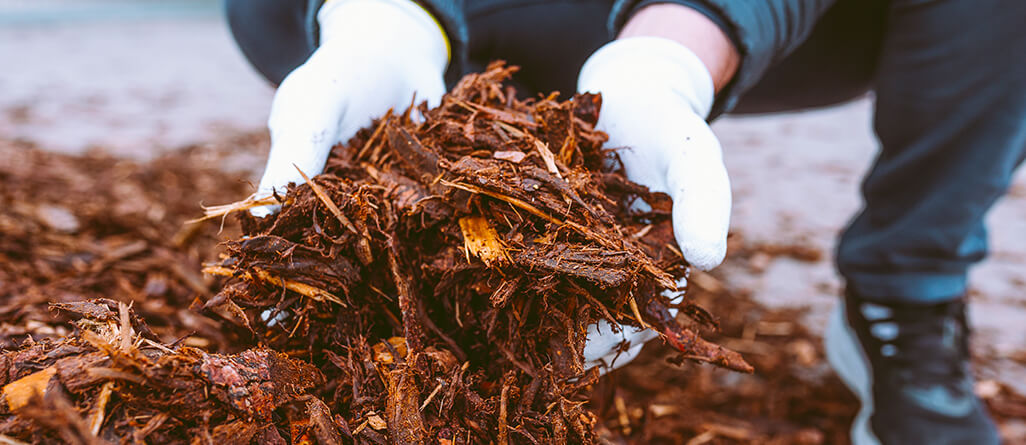
Cedar mulch is the most popular. Easy to obtain and effective at protecting your plants, it can be used anywhere, although it is less recommended for vegetable gardens due to its more acidic pH. The same goes for clippings from cutting cedar hedges. If you need to protect perennial vegetable plants in the vegetable garden, a layer of straw 7 to 10 cm thick is ideal.
Note that dyed mulches (black or red) are not harmful to plants or the environment since their colouration is of natural origin. Therefore, you can opt for black mulch (very discreet since it has the same colour as the soil) for the front of the house or the most visible flower beds, and use another type of mulch elsewhere.
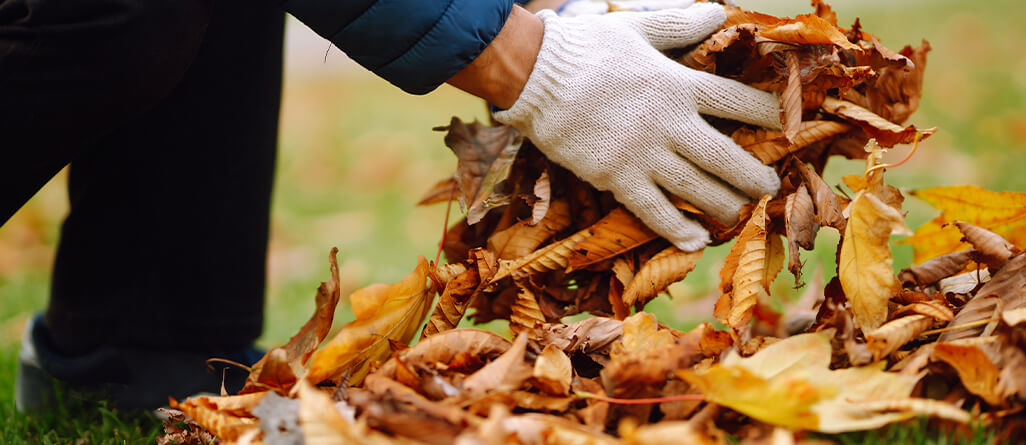
Dead leaves can also be used to protect your plants. Use shredded, healthy leaves to avoid transmitting diseases like powdery mildew or rust to your plants. Apply a 15-cm layer around trees, shrubs and perennials. Another advantage of shredded leaves is that in the spring, they will be easy to incorporate into the soil to enrich it.
GOOD TO KNOW
Whole leaves can also be used, but when they dry out, they’re quickly blown away in the wind and you'll have to rake again. They're also more likely to cause fungal problems and disease as they won’t let the air and light circulate as much.
Finally, grass clippings can also be used as mulch. Their drawback, however, is that they decompose quickly. Make sure your plants still have 5 cm of organic mulch before the snow sets in.
How to apply mulch?
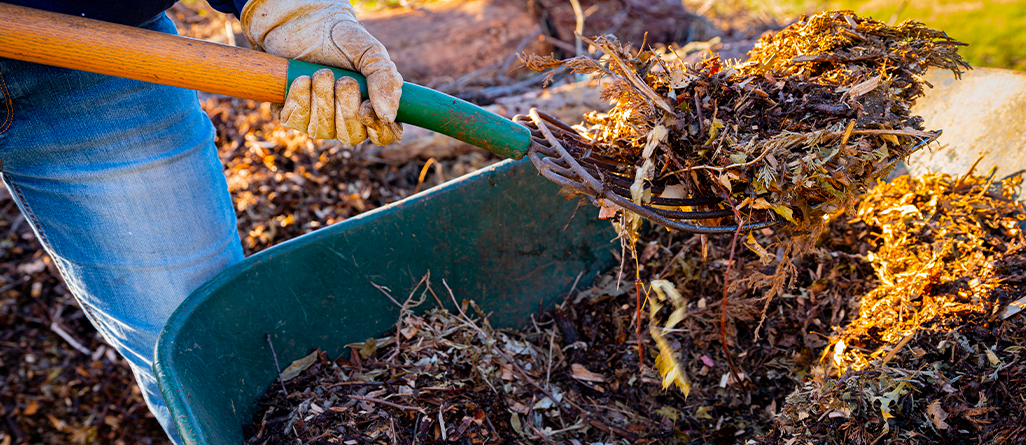
Before mulching, clean the flower bed. Remove dead leaves, small branches and weeds. Compost healthy debris. Again, remove diseased leaves.
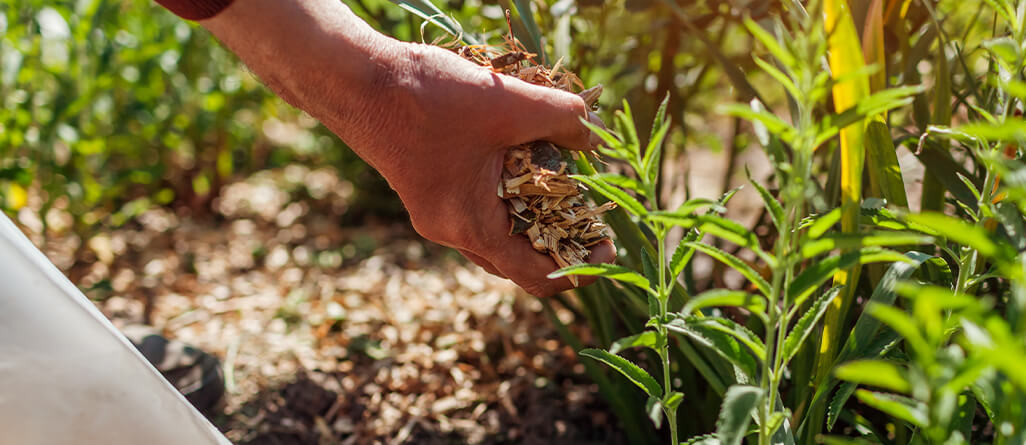
Apply a layer of cedar mulch 5 to 10 cm thick around perennials, and 7 to 10 cm around trees and shrubs, taking care not to put it too close to the trunks and the crown of the plants (ideally leave a space of 5 cm to avoid rot and diseases).
TIP: Water before applying mulch. Ideally, wait until the following spring to add compost and improve soil quality if necessary.
When should you mulch?
Don't mulch too early! Since the thickness required for adequate winter protection is sometimes greater than that recommended during the warmer months, it's best not to mulch too early. Just like installing winter fences, it's best to wait until the first frosts.
Is it possible to leave mulch all year round?
Mulch is beneficial year-round. However, it is important to note that the required thickness will depend on the type of mulch used, as well as the season in which it is used.
Therefore, to provide adequate winter protection, the mulch will need to be thicker than during the summer months. If you usually mulch your flower beds, it will probably be necessary to add more mulch before winter.
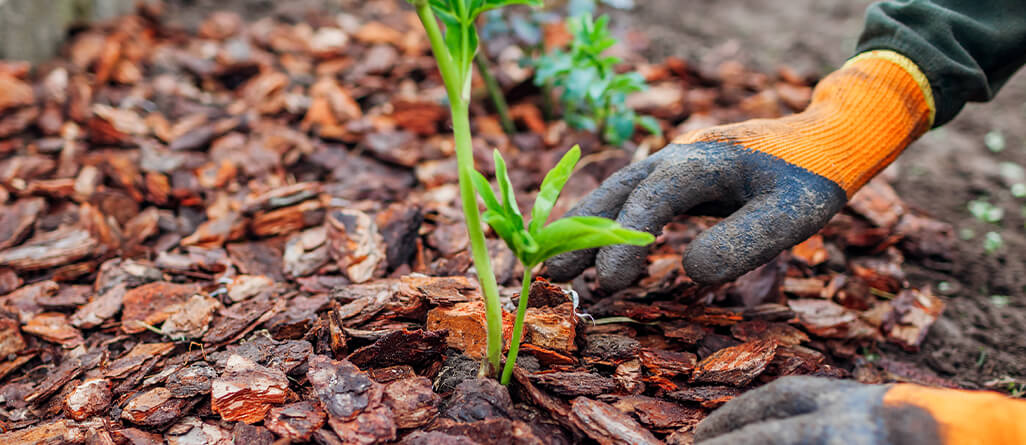
In the spring, if you used cedar mulch, simply redistribute it evenly in the flower beds to a thickness of 5 to 10 cm, or 7 to 10 cm at the base of trees. This way, the mulch applied in the fall will serve as mulch for the summer.
If you used organic mulch that has mostly decomposed, mix it into the soil to enrich it and feed your plants!
Which plants should I mulch in the fall?
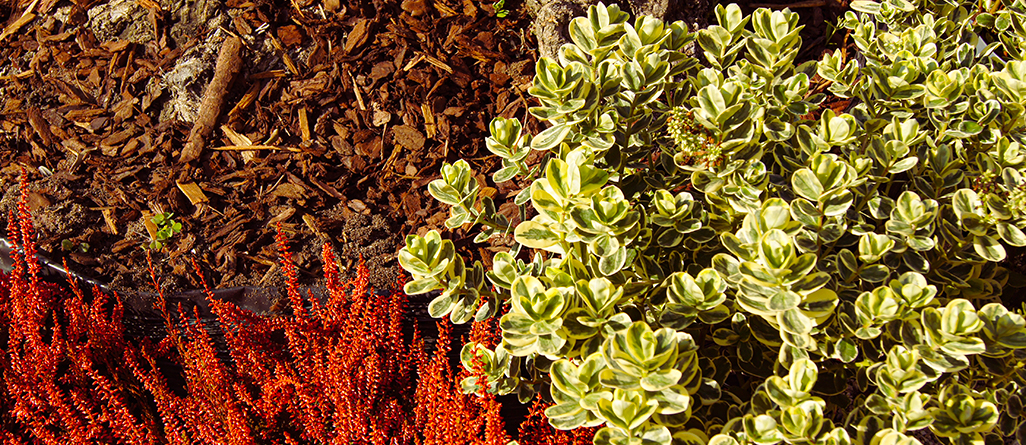
Regardless of where they're grown and whether they were planted during the year, some plants will benefit from an application of mulch to better survive the winter.
Note that these may be native plants or plants known to be hardy and whose roots and rhizomes are near the surface. In nature, these plants would have benefited from organic mulch generated over the years, something that isn't found in a well-maintained garden.
- Fragile perennials such as Japanese anemones, asters, crocosmias, perennial hibiscus, hostas, irises, lavender, peonies and Russian sage.
- Evergreen shrubs, hydrangeas, holly, rhododendrons, some hardy roses, mock oranges and weigelas.
- Berries sensitive to temperature fluctuations: strawberries, raspberries, blackberries and blueberries. Straw is an excellent choice because in summer, it will prevent strawberries from lying on damp soil and rotting prematurely.
Fruit trees, young trees and newly planted trees.
TIP: Everyone appreciates a clean garden in the fall. However, your perennials withstand the harsh winter better if they aren't cut back in the fall. Their faded foliage helps protect them from the cold. This is especially true for ornamental grasses.